Žaizdų priežiūros ir tvarstymo metodų treniruoklis
Kodas: 3B Scientific 1020592Kaina 133027 € su PVMPrekę turime sandėlyje. Užsakius ir apmokėjus šiandien iki 14 val., pristatytume kitą darbo dieną.
Šiuo metu prekės nėra sandėlyje. Numatomas pristatymo laikas nurodytas žemiau.
Pateikus užsakymą, susisieksime su Jumis ir informuosime apie tikslų numatomą užsakymo pristatymo laiką.
Šiuo metu prekės nėra sandėlyje. Numatomas pristatymo laikas nurodytas žemiau.
Pateikus užsakymą, susisieksime su Jumis ir informuosime apie tikslų numatomą užsakymo pristatymo laiką.
GamintojasPristatymo laikas3-6 savaitės-
Informacija apie prekę Prekės kodas 1020592 [P100] Svoris7 kg Išmatavimai 23 x 46 x 77 cm Ženklas 3B Scientific Trainer for wound care and bandaging techniques
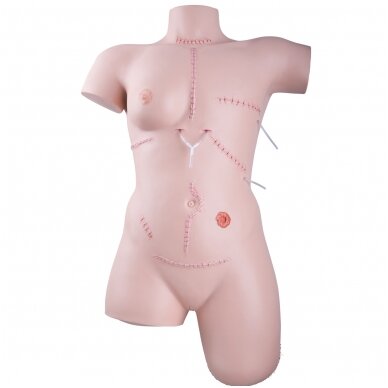
With the Trainer for wound care and bandaging techniques for trainee nurses and doctors, students learn how to care correctly for their patients’ wounds and can practice a wide range of dressing and bandaging techniques. By training, the subsequent care of real patients can be markedly improved and hygiene standards and protocols can be respected.
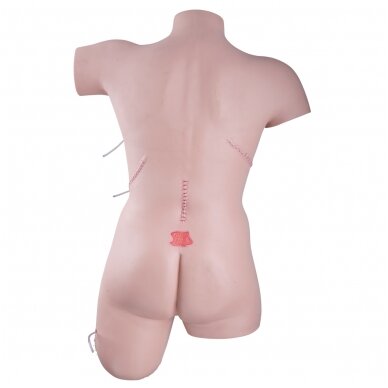
The following wounds and drain systems as the result of surgical procedures and injuries are shown realistically on the torso:
- Wound after a thyroidectomy, center
- Wound after a sternotomy (with drain), center
- Wound after a mastectomy (with drain), right
- Wound after a spleenectomy (with drain), left
- Wound after a thoracotomy (pneumonectomy), right
- Wound after a median laparotomy (e.g. cystectomy), center
- Wound after an appendectomy, right
- Wound after a Pfannenstiel incision (e.g. C-section or abdominal hysterectomy), center
- Wound after a laminectomy, center; rear
- Wound after a nephrectomy (side incision)
- Wound after an amputation (leg stump), left
- Colostomy
- Decubitus (grade 2), center; rear
Prekių krepšelis
Krepšelis tuščias.


